Project Overview

Hold & Release: Embodied Interaction
Designing a tangible digital journaling ritual that translates physical tension into visual catharsis.

[Role]

Concept & Interaction Designer (Solo)

[Duration]

2 Weeks, 2025

[Tech Stack]

Arduino, Flex Sensors, p5.js, Processing, Physical Computing

Tangible UI

Embodied Interaction

Sensory Design

The Challenge & Logic

Designing for Emotional Physicality

Digital interactions are typically reduced to tapping on flat glass, resulting in a disconnected, purely transactional experience. My primary challenge was to design a spatial interface that genuinely recognizes the raw physicality of human emotion, transforming abstract psychological stress into a highly tangible, interactive object. To achieve this, I investigated how hardware could actively feel the emotional weight of a specific moment.

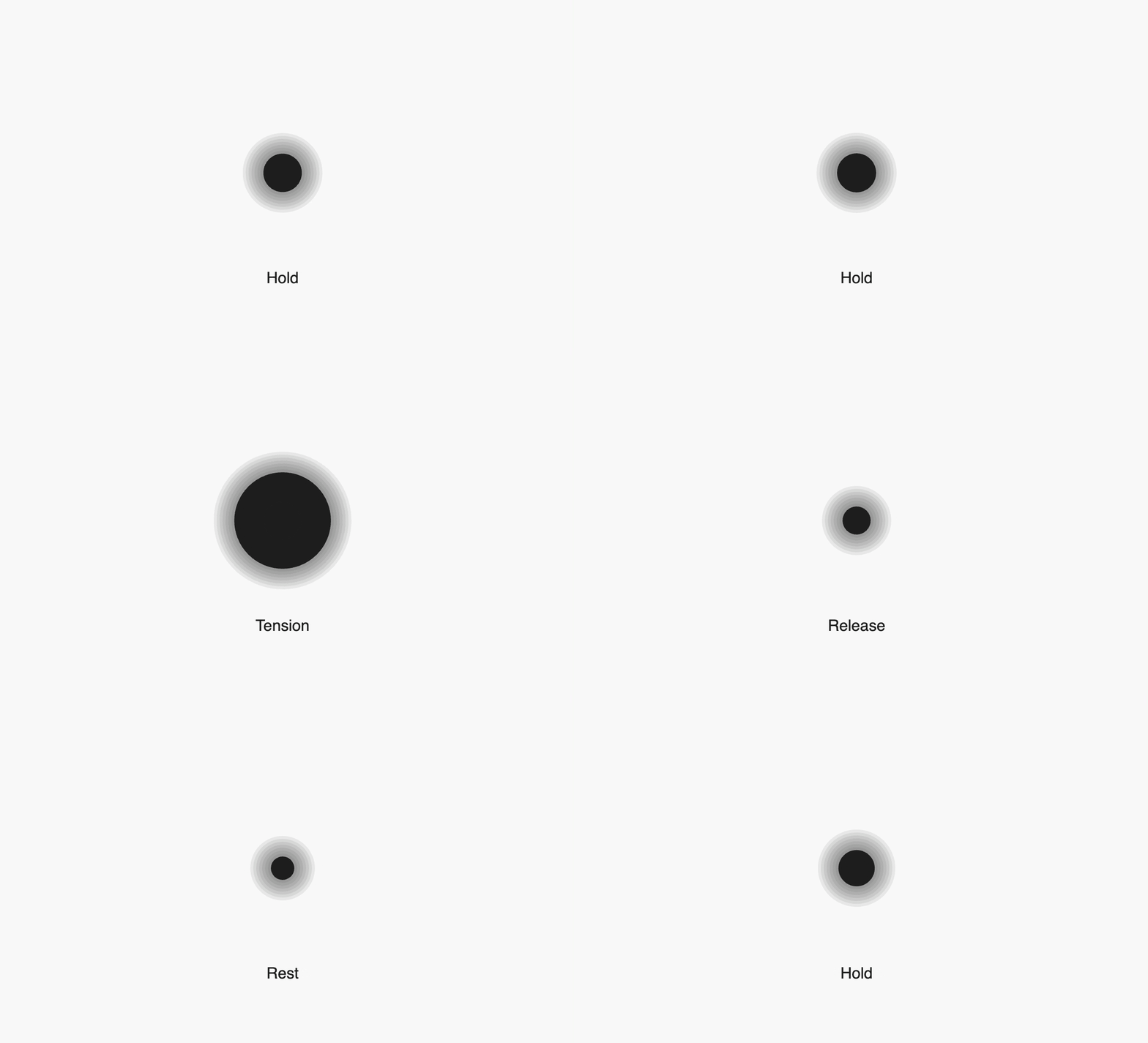
To bridge this gap, I developed a sensory system rooted entirely in 'Embodied Interaction.' The core logic translates the body's natural language—specifically physical tension and release—into direct digital feedback. When a user actively squeezes the hybrid device, the system accurately maps this analog pressure to digital text, creating a powerful feedback loop that mirrors internal anxiety with real-time visual text distortion mechanics.

Execution & Craft

Turning Touch into Visual Catharsis

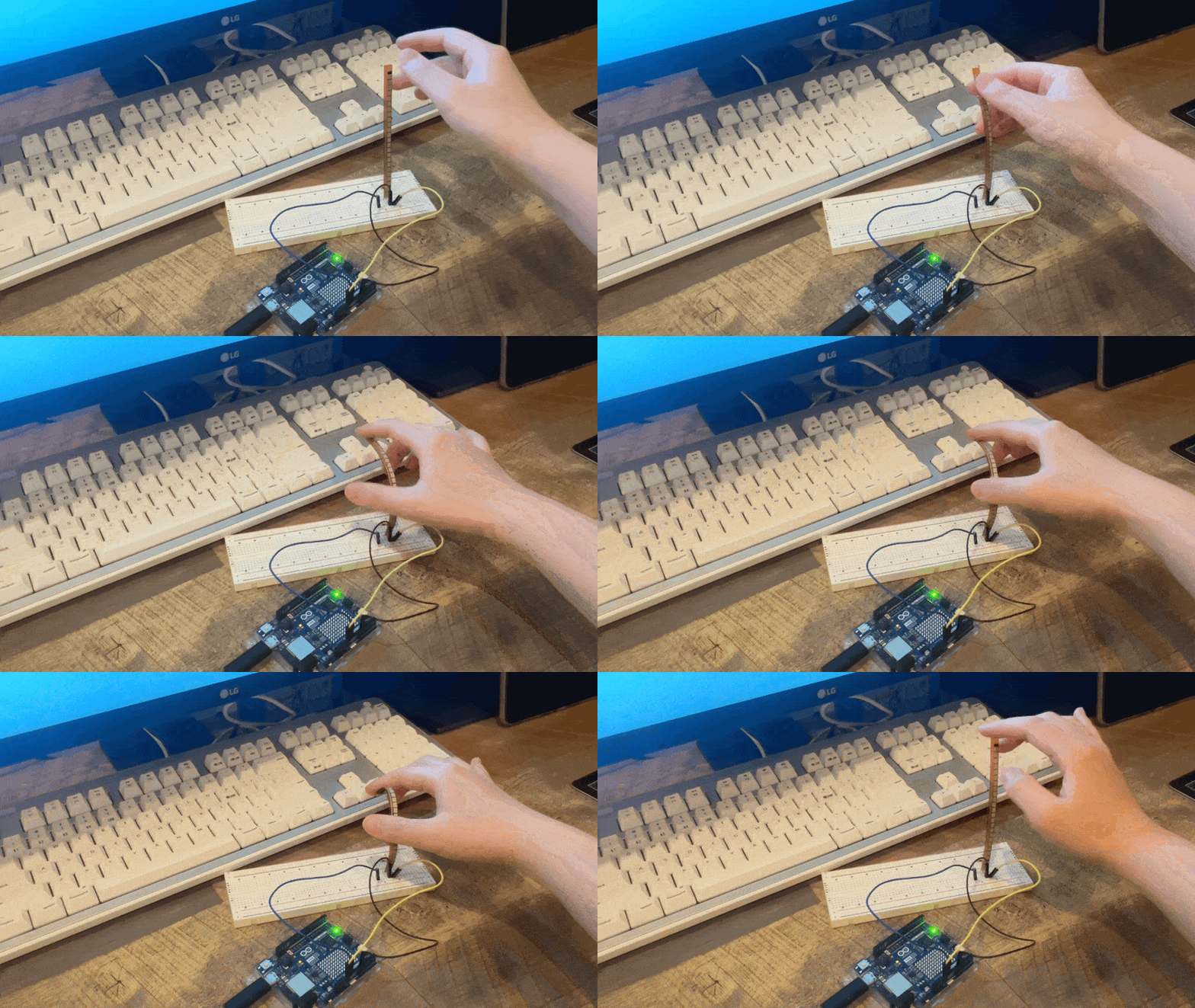
This ritual required building a custom hardware-software pipeline. I engineered a tactile, soft-casing physical trigger embedded with an Arduino and flex sensors. The software layer, built in Processing, establishes real-time serial communication with the physical device. As the user types the thought they are holding onto, the system waits in a quiet, ambient state, ready to receive physical input.

As the user squeezes the sensor, analog data drives the typography's 'jitter' and 'opacity' parameters. The text trembles violently, mirroring their physical tension. The moment they physically let go, the digital text dramatically shatters into particles and drifts away. This precise data mapping transforms an invisible gesture into a deeply satisfying moment of visual and direct somatic emotional catharsis.


Execution & Craft

Turning Touch into Visual Catharsis

This ritual required building a custom hardware-software pipeline. I engineered a tactile, soft-casing physical trigger embedded with an Arduino and flex sensors. The software layer, built in Processing, establishes real-time serial communication with the physical device. As the user types the thought they are holding onto, the system waits in a quiet, ambient state, ready to receive physical input.

As the user squeezes the sensor, analog data drives the typography's 'jitter' and 'opacity' parameters. The text trembles violently, mirroring their physical tension. The moment they physically let go, the digital text dramatically shatters into particles and drifts away. This precise data mapping transforms an invisible gesture into a deeply satisfying moment of visual and direct somatic emotional catharsis.


Impact & Takeaway

Feeling Beyond the Screen

Hold & Release proves that technology can effectively support emotional regulation if we thoughtfully design for the senses. It pushes interaction design beyond merely 'clicking' into the profound realm of 'feeling.'

By leveraging the body's natural language to drive digital experiences, this project demonstrates how tangible interfaces can successfully transform passive screens into active, empathetic tools for deep psychological and somatic relief.

Feeling Beyond the Screen

Impact & Takeaway

Hold & Release proves that technology can effectively support emotional regulation if we thoughtfully design for the senses. It pushes interaction design beyond merely 'clicking' into the profound realm of 'feeling.'

By leveraging the body's natural language to drive digital experiences, this project demonstrates how tangible interfaces can successfully transform passive screens into active, empathetic tools for deep psychological and somatic relief.

All Works