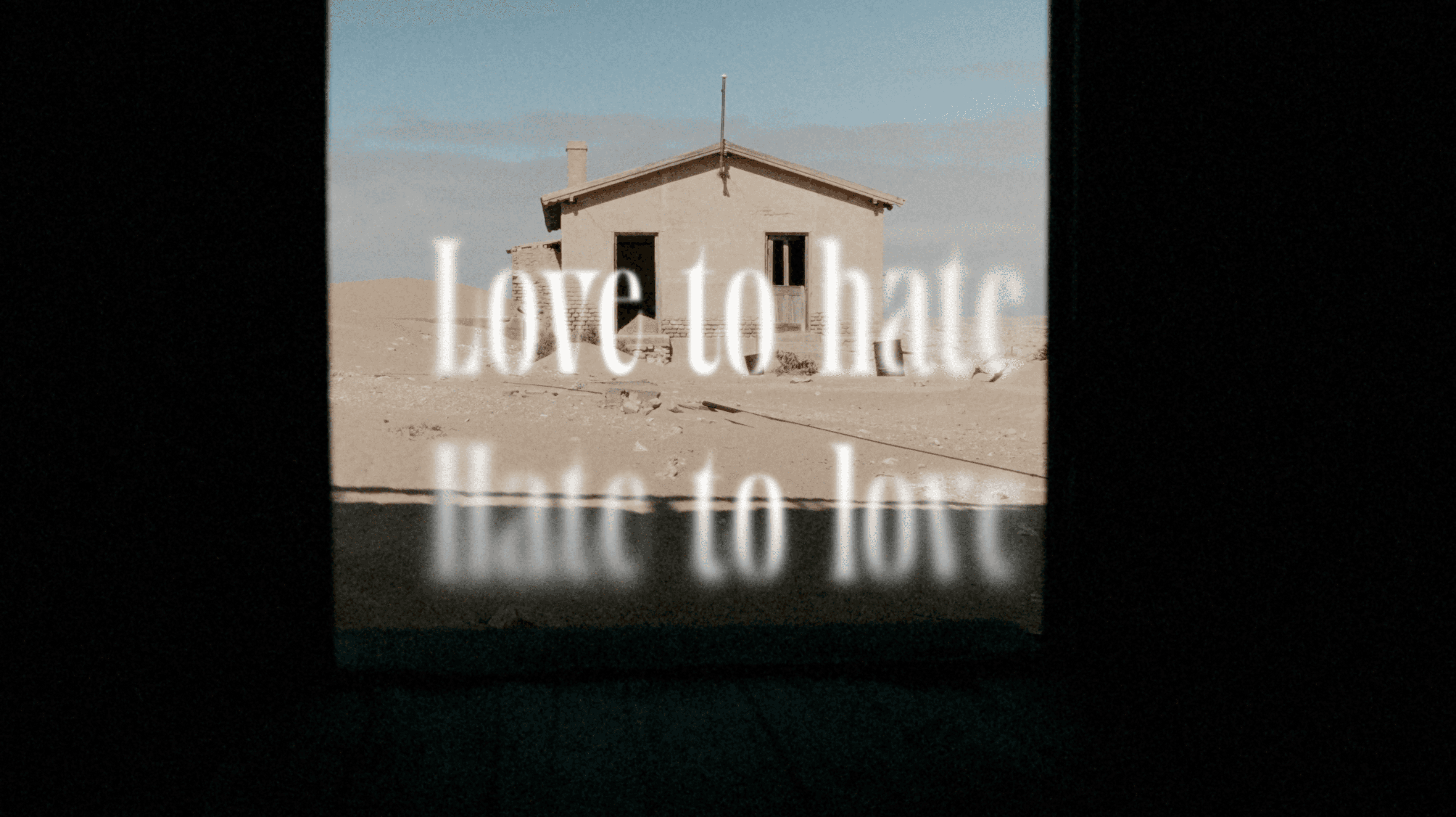
Love to Hate, Hate to Love.

Love to Hate, Hate to Love.

Love to Hate, Hate to Love.

What if contradiction itself was a mirror of our desires? A visual essay exploring how pleasure and guilt, love and discomfort, coexist in daily life.

What if contradiction itself was a mirror of our desires? A visual essay exploring how pleasure and guilt, love and discomfort, coexist in daily life.

Visual Storytelling

View all projects

Motion Design

View all projects

Interaction Design

View all projects

Concept Development

View all projects

Emotional UX

View all projects

Generative Systems

View all projects

Scope

Experimental Media

Role

Concept / Interaction / Video / Motion Designer (Solo)

Duration

3 weeks

Year

2025
/

Background

(01)

The Mechanics of Duality
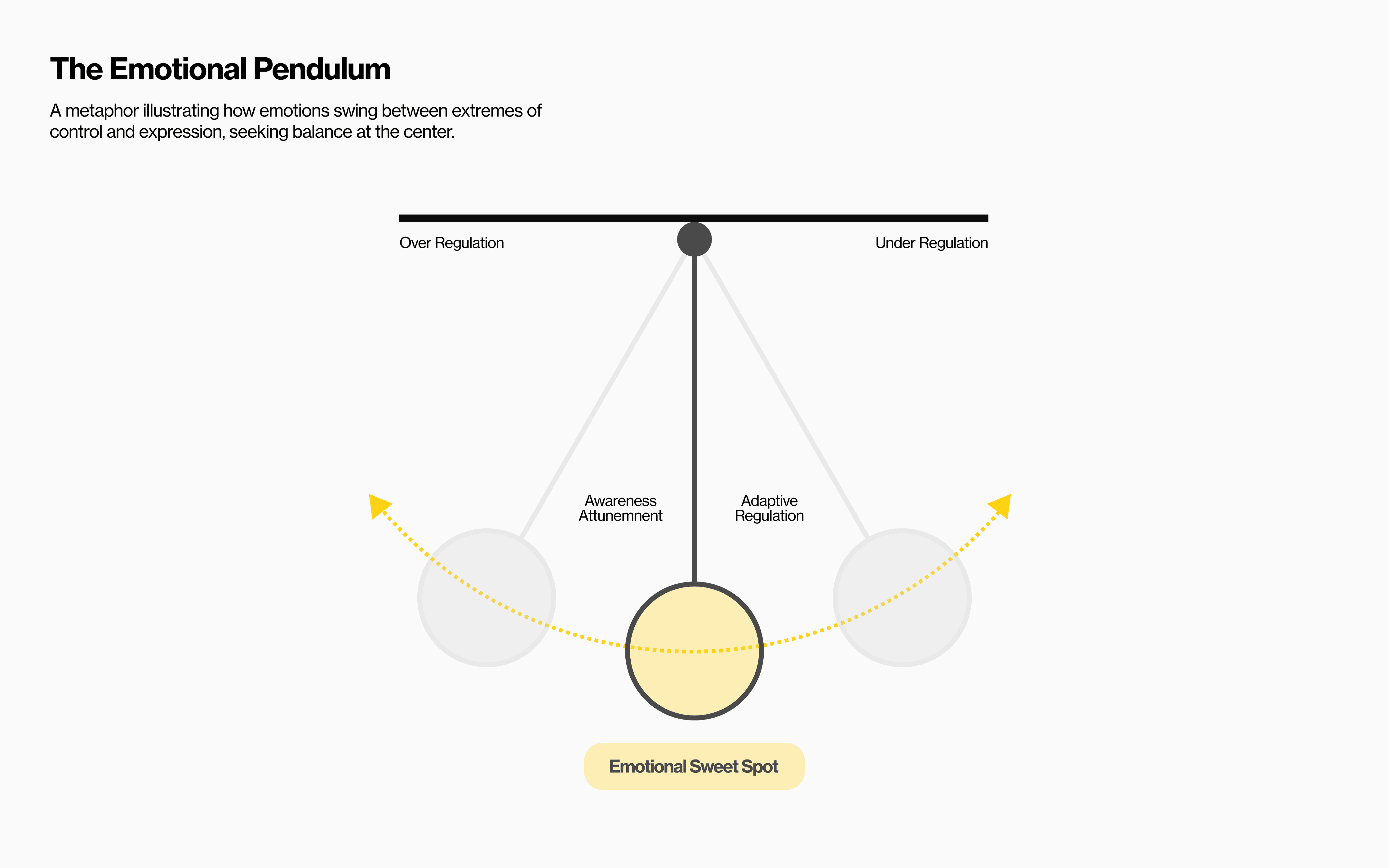
How does the emotional spectrum move? I investigated the concept of the "emotional pendulum"—a psychological system where love and hate are not static opposites, but active forces in constant oscillation.

My research focused on translating this invisible swing into spatial proportion and material form. By studying the physics of imbalance and mapping its rhythm into folded structures, I explored how psychological tension could be captured and held within a physical design object.

How does the emotional spectrum move? I investigated the concept of the "emotional pendulum"—a psychological system where love and hate are not static opposites, but active forces in constant oscillation.

My research focused on translating this invisible swing into spatial proportion and material form. By studying the physics of imbalance and mapping its rhythm into folded structures, I explored how psychological tension could be captured and held within a physical design object.

/

Concept

(02)

Visualizing the Pendulum

Visualizing the Pendulum

How do you give physical form to an abstract feeling? This project investigates the psychological tension between opposing states—pleasure and guilt, love and discomfort. I wanted to translate this emotional "pendulum" into a spatial experience, moving beyond 2D video into a dimensional, structural reality.

How do you give physical form to an abstract feeling? This project investigates the psychological tension between opposing states—pleasure and guilt, love and discomfort. I wanted to translate this emotional "pendulum" into a spatial experience, moving beyond 2D video into a dimensional, structural reality.

/

Viewing Experience

(03)

From Digital Motion to Physical Fold

From Digital Motion to Physical Fold

This project required bridging the gap between screen-based animation and physical sculpture.

  • The Metaphor: I used the physics of a pendulum—its timing, tension, and gravity—as the driver for the design system.

  • The Form: I designed a 3D accordion structure—a "pleated canvas"—that mimics the expansion and compression of lungs. The geometry was scored and folded by hand to create depth.

  • The Light: I created a motion study in After Effects, exploring tension and release. This digital layer was then projection-mapped back onto the physical folds

This project required bridging the gap between screen-based animation and physical sculpture.

  • The Metaphor: I used the physics of a pendulum—its timing, tension, and gravity—as the driver for the design system.

  • The Form: I designed a 3D accordion structure—a "pleated canvas"—that mimics the expansion and compression of lungs. The geometry was scored and folded by hand to create depth.

  • The Light: I created a motion study in After Effects, exploring tension and release. This digital layer was then projection-mapped back onto the physical folds

/

Outcome

(04)

Frozen Tension

Frozen Tension

The final piece is a mixed-media installation. The physical model remains static, acting as the "body," while the projected light acts as the "soul."

By overlaying these two layers, the object appears to breathe and mutate. The light doesn't just sit on the surface; it interacts with the peaks and valleys of the paper, distorting the image to create a sculptural hologram.

The final piece is a mixed-media installation. The physical model remains static, acting as the "body," while the projected light acts as the "soul."

By overlaying these two layers, the object appears to breathe and mutate. The light doesn't just sit on the surface; it interacts with the peaks and valleys of the paper, distorting the image to create a sculptural hologram.

  1. Projected motion on physical model

  1. Projected motion on physical model

/

Reflection

(05)

Why It Matters

Why It Matters

This project was an exercise in sensory translation. It taught me how to take a time-based medium (video) and anchor it to a spatial medium (sculpture). For interaction design, this is critical: understanding how digital content "lives" on physical surfaces is the key to creating immersive environments.

This project was an exercise in sensory translation. It taught me how to take a time-based medium (video) and anchor it to a spatial medium (sculpture). For interaction design, this is critical: understanding how digital content "lives" on physical surfaces is the key to creating immersive environments.

Designing moments that bridge the digital and physical, where technology feels human and imagination feels real.

I’d love to connect and create something meaningful together.

Yuna Kim © 2026 All rights reserved

Designing moments that bridge the digital and physical, where technology feels human and imagination feels real.

I’d love to connect and create something meaningful together.

Yuna Kim © 2026 All rights reserved

Designing moments that bridge the digital and physical, where technology feels human and imagination feels real.

I’d love to connect and create something meaningful together.

Yuna Kim © 2026 All rights reserved