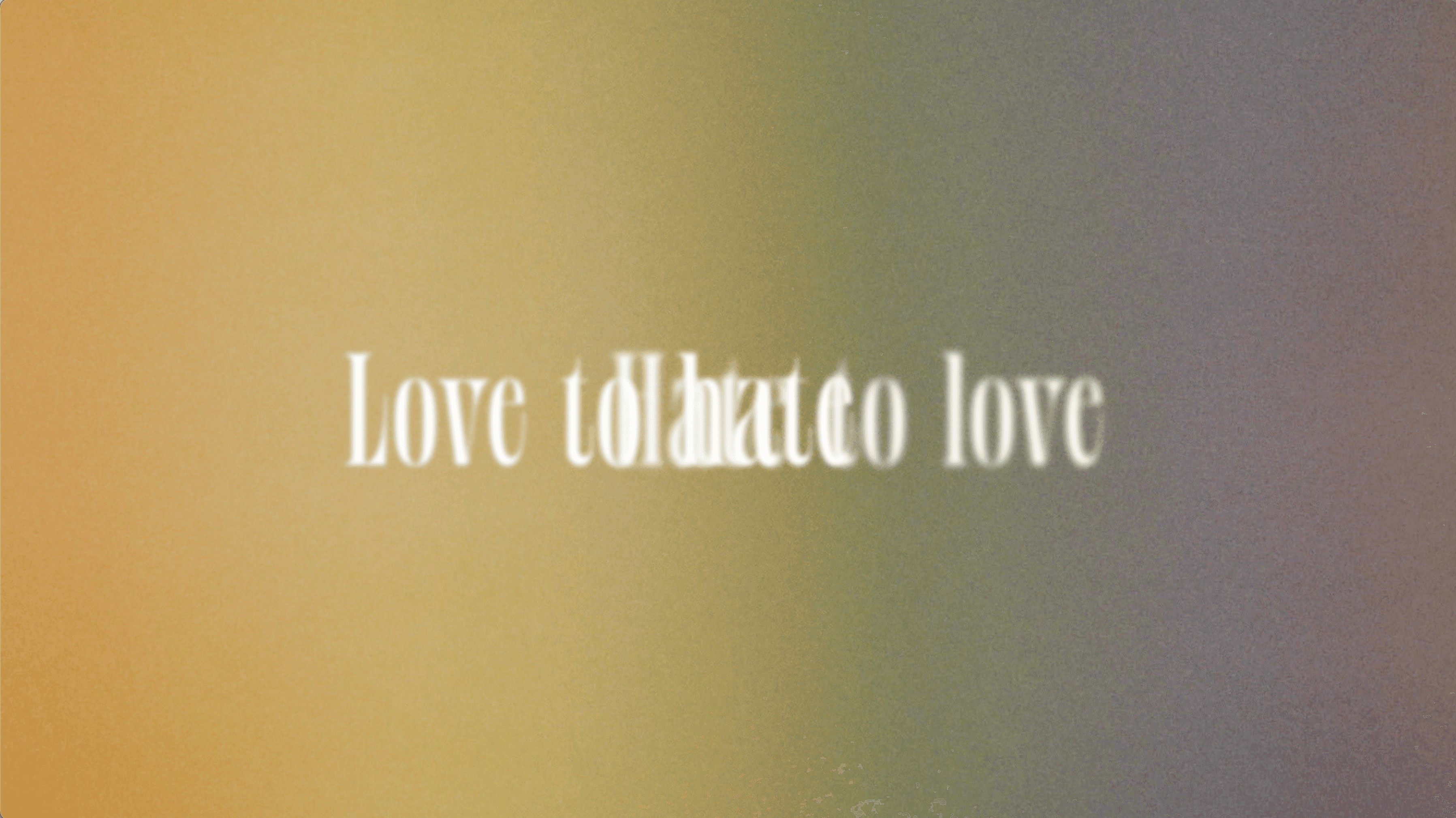
Olfactory Passage.
Olfactory Passage.
Olfactory Passage.
What if scent could become a meaningful part of digital interaction? Olfactory Passage is an interactive installation that translates proximity and human presence into scent and abstract visuals, creating a shared, embodied experience of memory through smell, motion, and space.
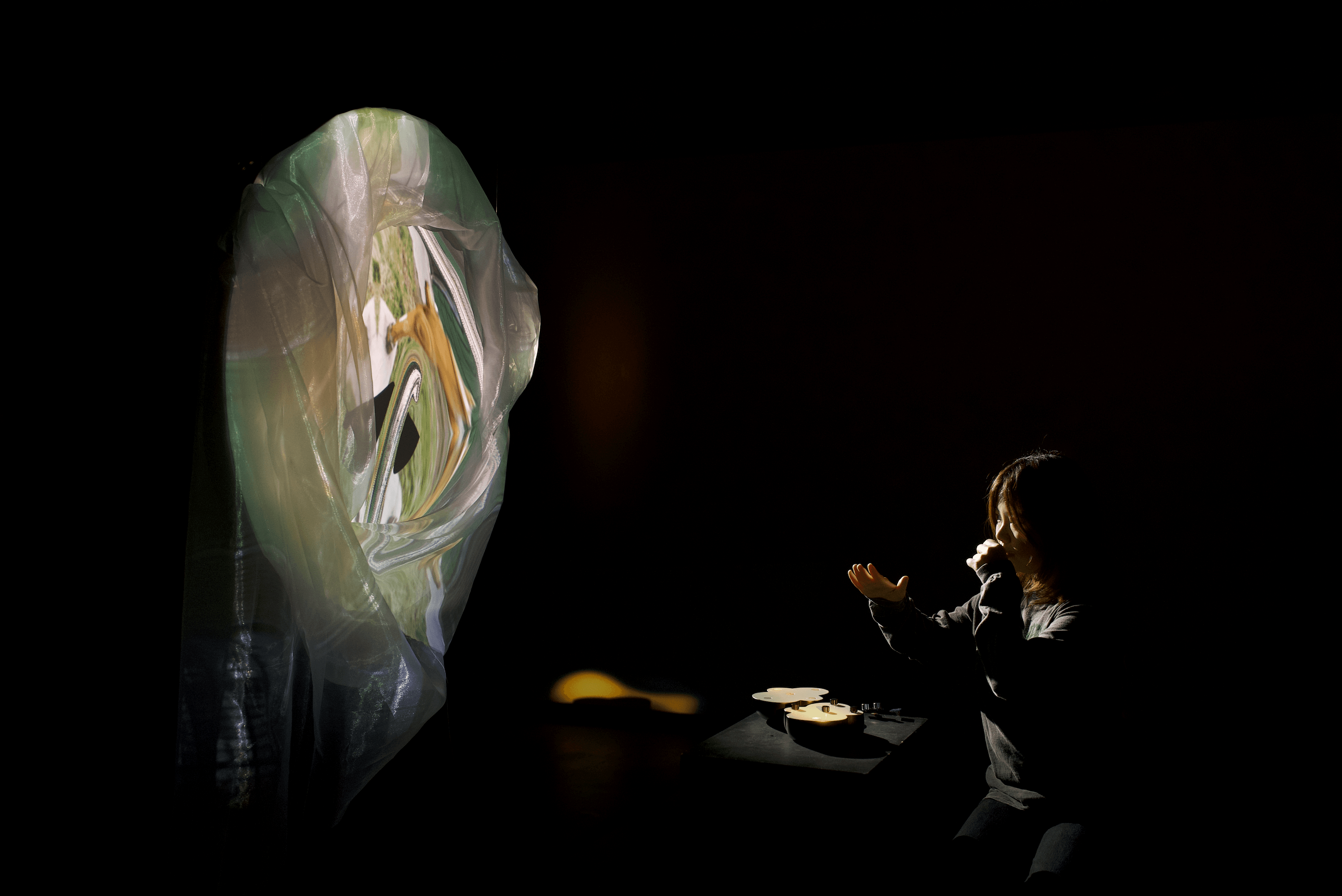
What if scent could open a window into memory?Olfactory Passage invites audiences to step into a glowing portal, explore five scents, and experience how memory transforms through light, motion, and sound. Inspired by my memories of Los Angeles, the installation turns scent into atmosphere a shared space where personal and collective memories intertwine.
What if scent could open a window into memory? This installation invites audiences to enter a glowing portal, explore five scents, and experience how memory transforms through light, motion, and sound.
Interaction Design
View all projects
Physical Computing
View all projects
Arduino
View all projects
Sensors
View all projects
TouchDesigner
View all projects
Spatial UX
View all projects
System Thinking
View all projects
Scope
Interactive Installation
Role
Interaction Designer / Researcher / Experience Prototyper (Solo)
Duration
7 weeks
Year
2025
/
The Challenge
(01)
Digital interactions are increasingly confined to flat screens, stripping away the richness of human senses.
I wanted to build an interface that responds to physical presence rather than clicks—turning invisible sensory input into tangible feedback.
Digital interactions are increasingly confined to flat screens, stripping away the richness of human senses.
I wanted to build an interface that responds to physical presence rather than clicks—turning invisible sensory input into tangible feedback.
/
Making Process
(02)
What I Build (Code + Craft)
What I Build (Code + Craft)
Engineering the Invisible. I built a circular portal that translates distance into atmosphere. The system creates a bridge between hardware, code, and chemistry.
Hardware: Arduino Uno R4 + Ultrasonic sensors to track user proximity.
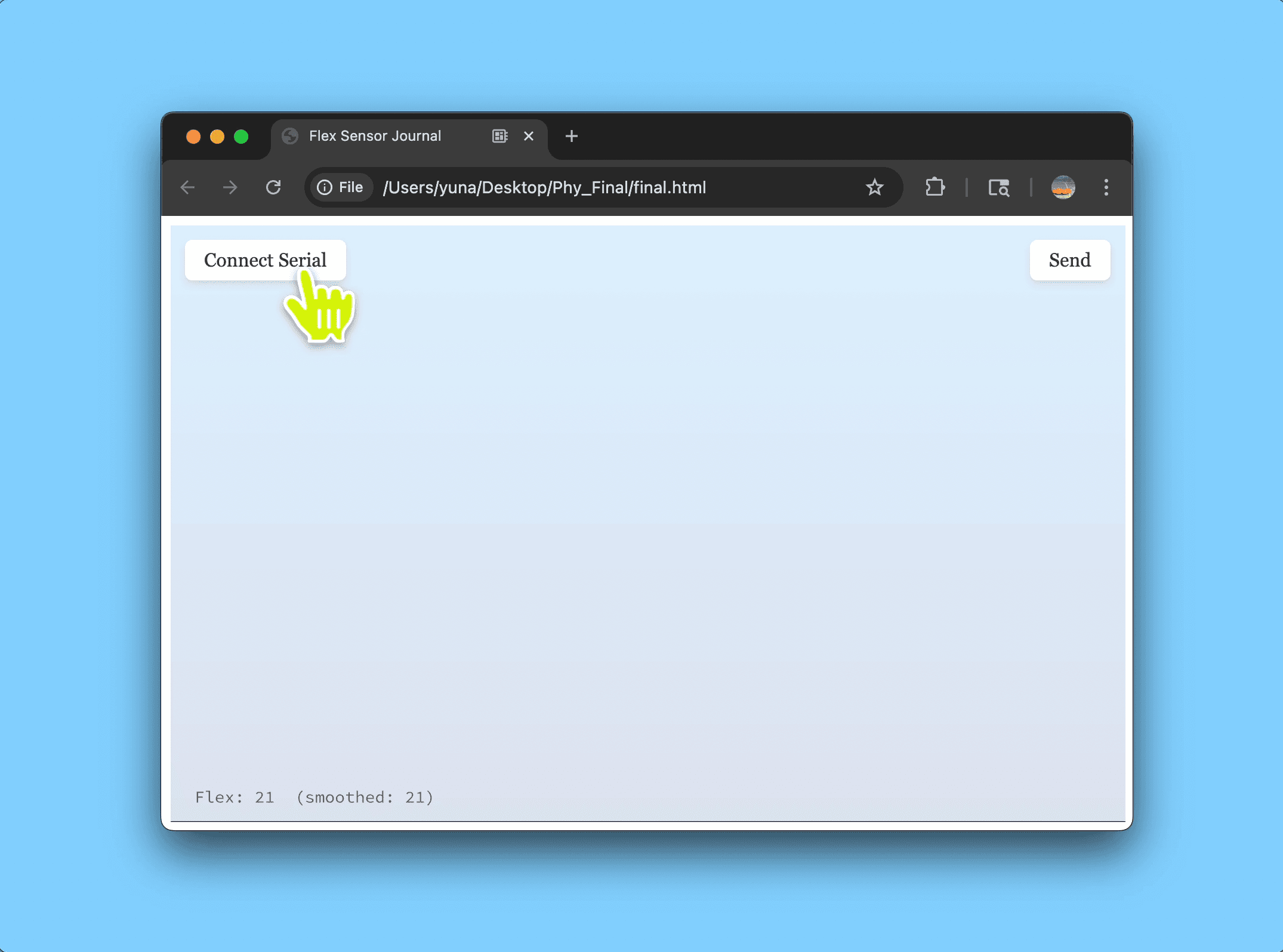
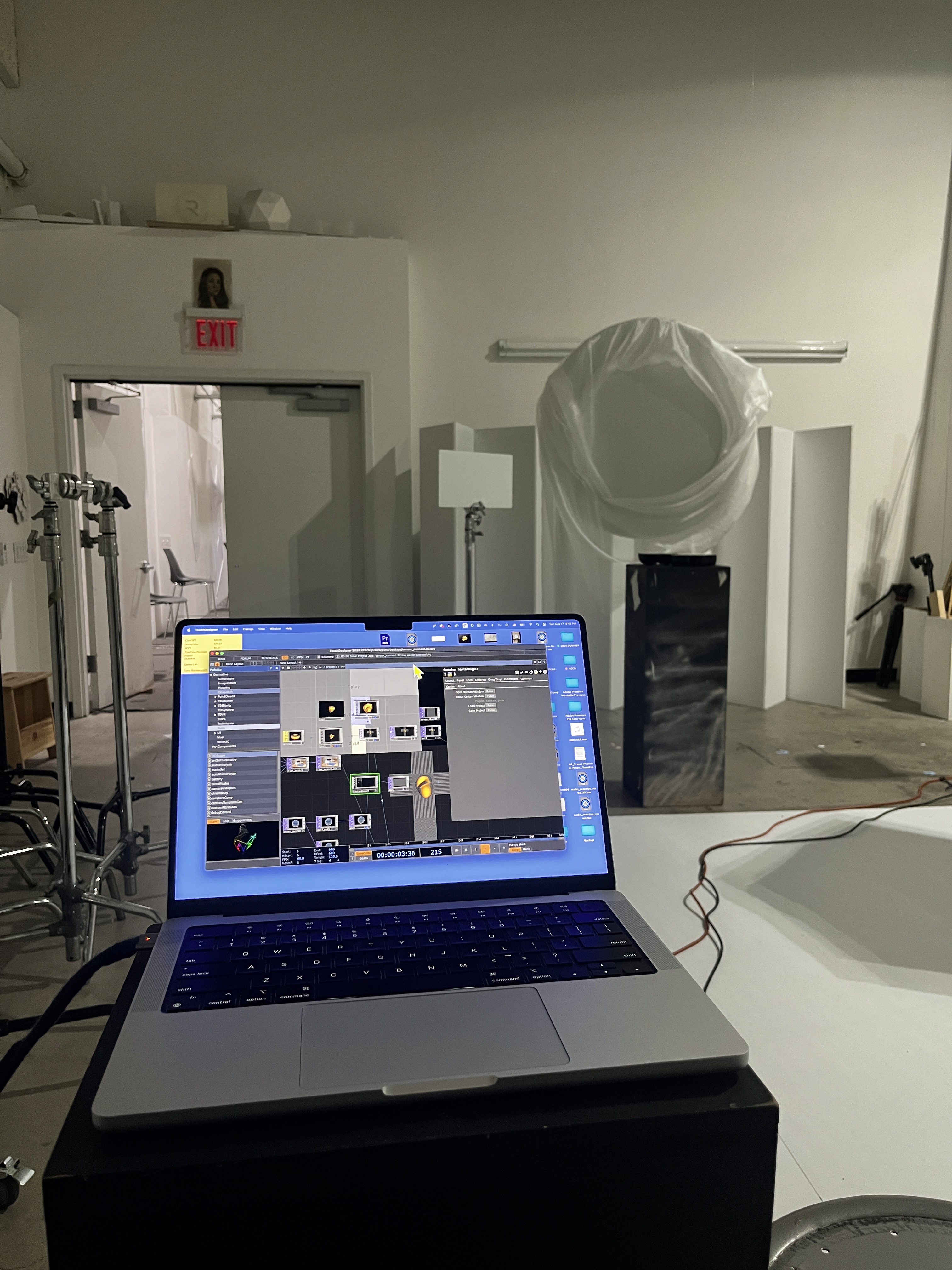
Software: I built a custom bridge between Arduino and TouchDesigner via serial communication. Sensor data drives the velocity and density of the generative visuals in real-time.
Fabrication: Hand-sculpted 20lb high-density foam into a circular frame, finished with projection-mapping paint to catch the light.
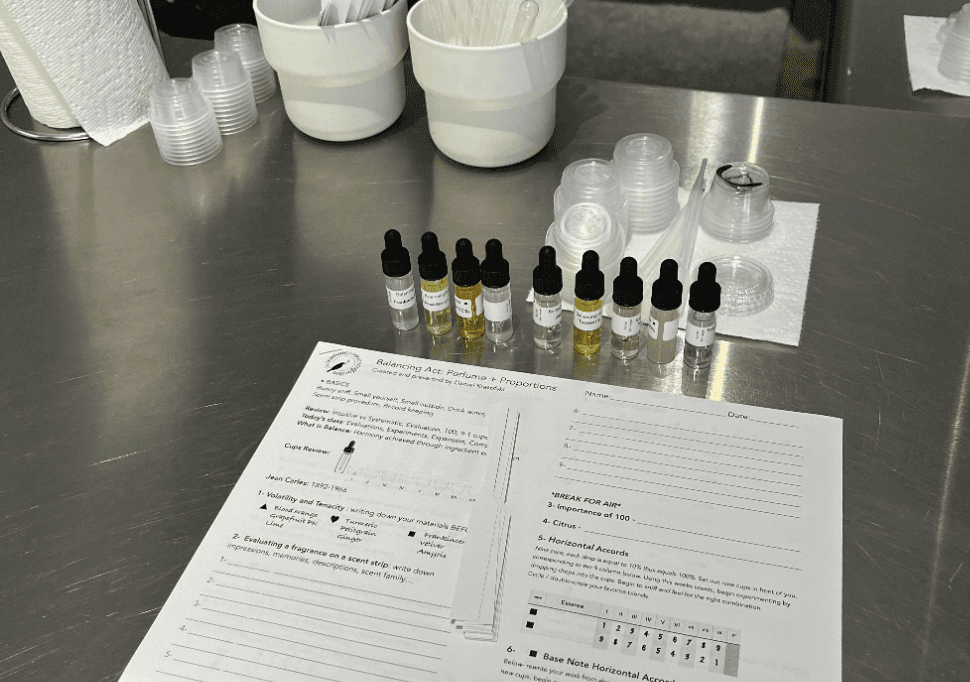
Chemistry: I studied at the Institute for Art and Olfaction to compose a custom scent (Birch Tar & Neroli) designed to trigger memory and ground the digital visuals.
Engineering the Invisible. I built a circular portal that translates distance into atmosphere. The system creates a bridge between hardware, code, and chemistry.
Hardware: Arduino Uno R4 + Ultrasonic sensors to track user proximity.
Software: I built a custom bridge between Arduino and TouchDesigner via serial communication. Sensor data drives the velocity and density of the generative visuals in real-time.
Fabrication: Hand-sculpted 20lb high-density foam into a circular frame, finished with projection-mapping paint to catch the light.
Chemistry: I studied at the Institute for Art and Olfaction to compose a custom scent (Birch Tar & Neroli) designed to trigger memory and ground the digital visuals.
Technical Insight (The Hysteresis Loop): To differentiate between a casual passerby and an intentional user, I programmed a 'hysteresis' threshold in the code—a data buffer zone. The system waits for sustained proximity before triggering. This prevents the visuals from flickering if a user hesitates, ensuring the experience feels stable and intentional.
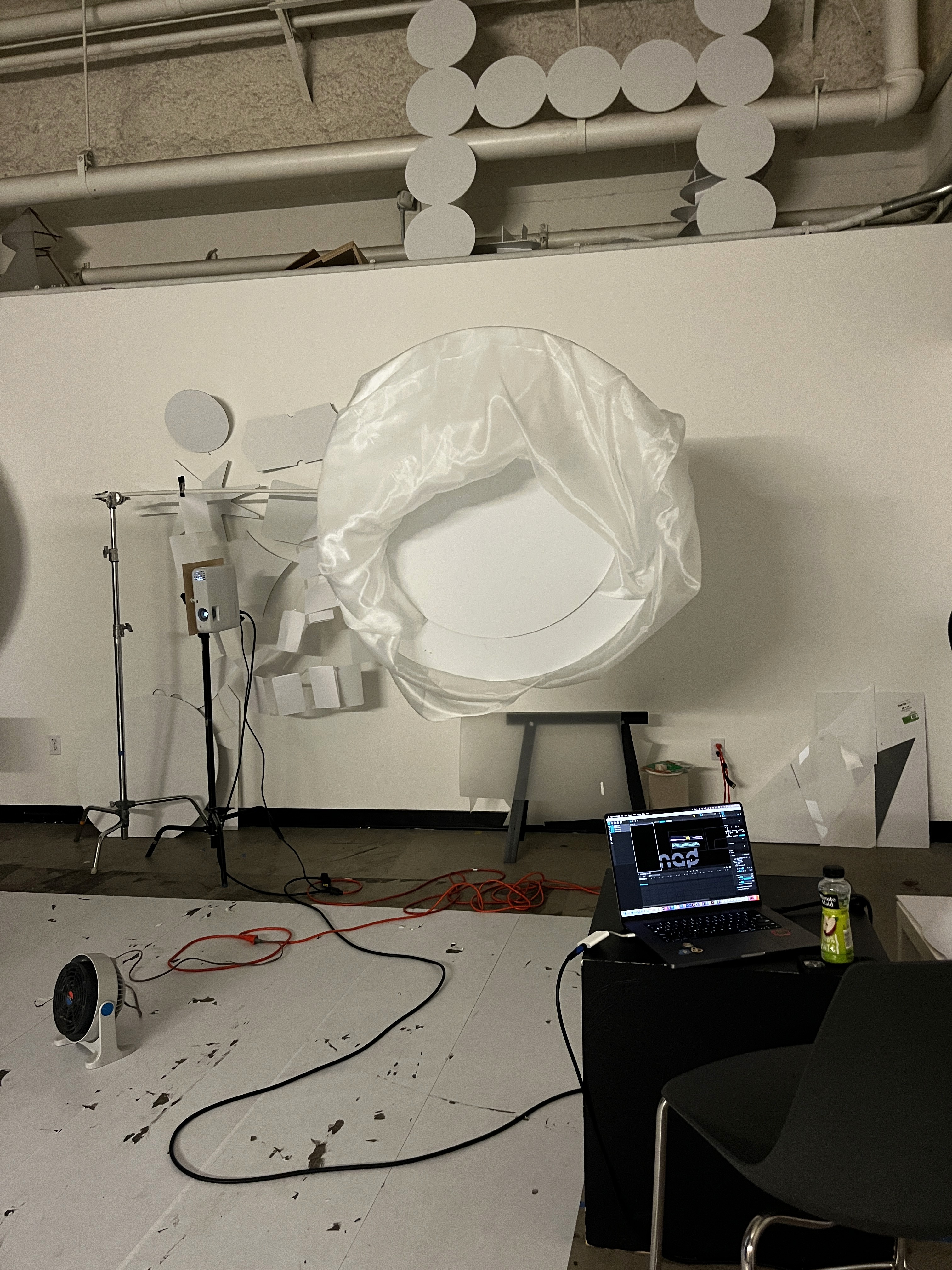
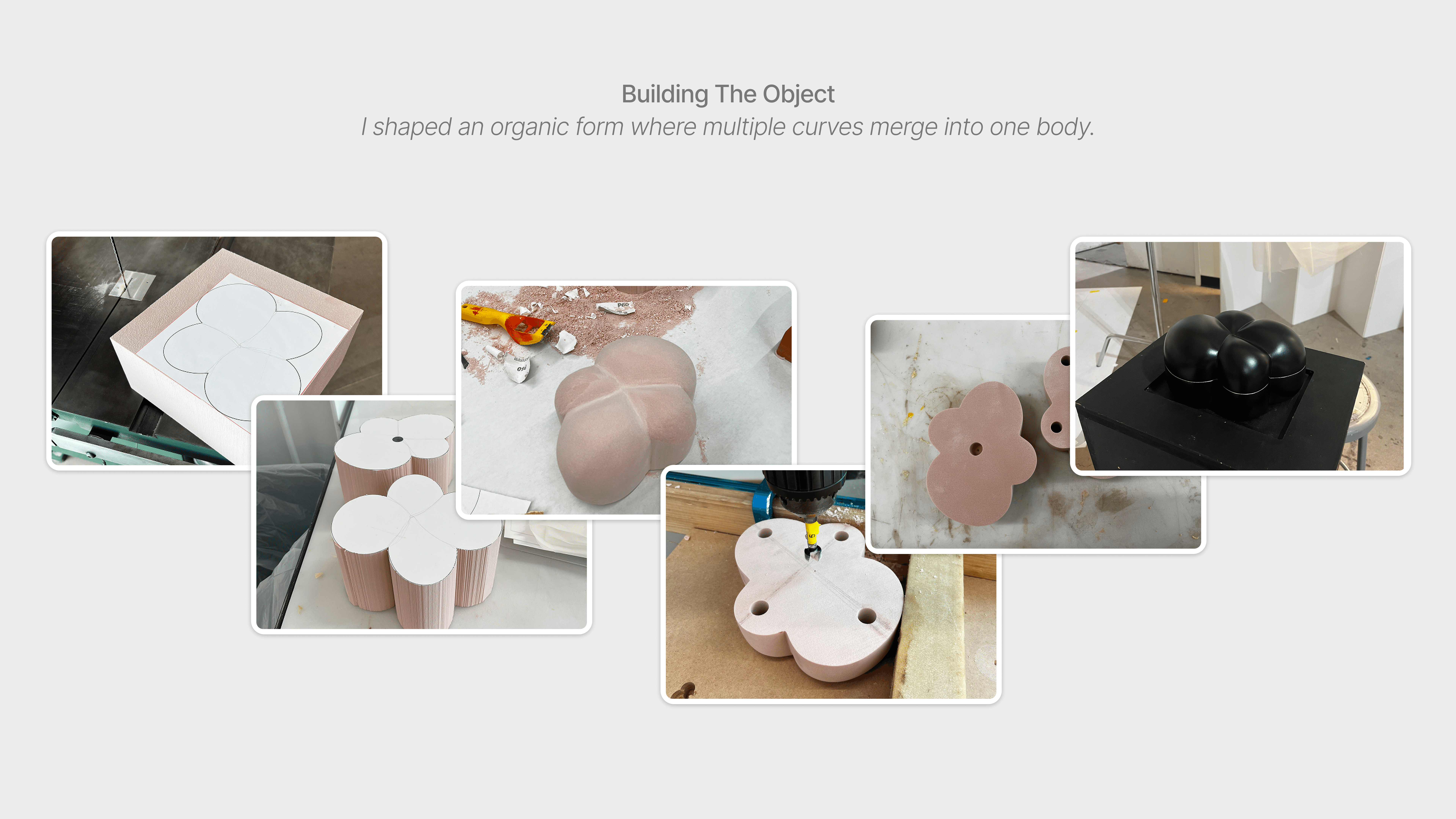
Building the installation from code to craft
Building the installation from code to craft
Studied scent composition and blending at the Institute for Art and Olfaction
Studied scent composition and blending at the Institute for Art and Olfaction
/
Interaction Flow
(03)
From Approach to Transformation
From Approach to Transformation
From Stasis to Scent. The experience dissolves the barrier between user and system through a four-stage loop.
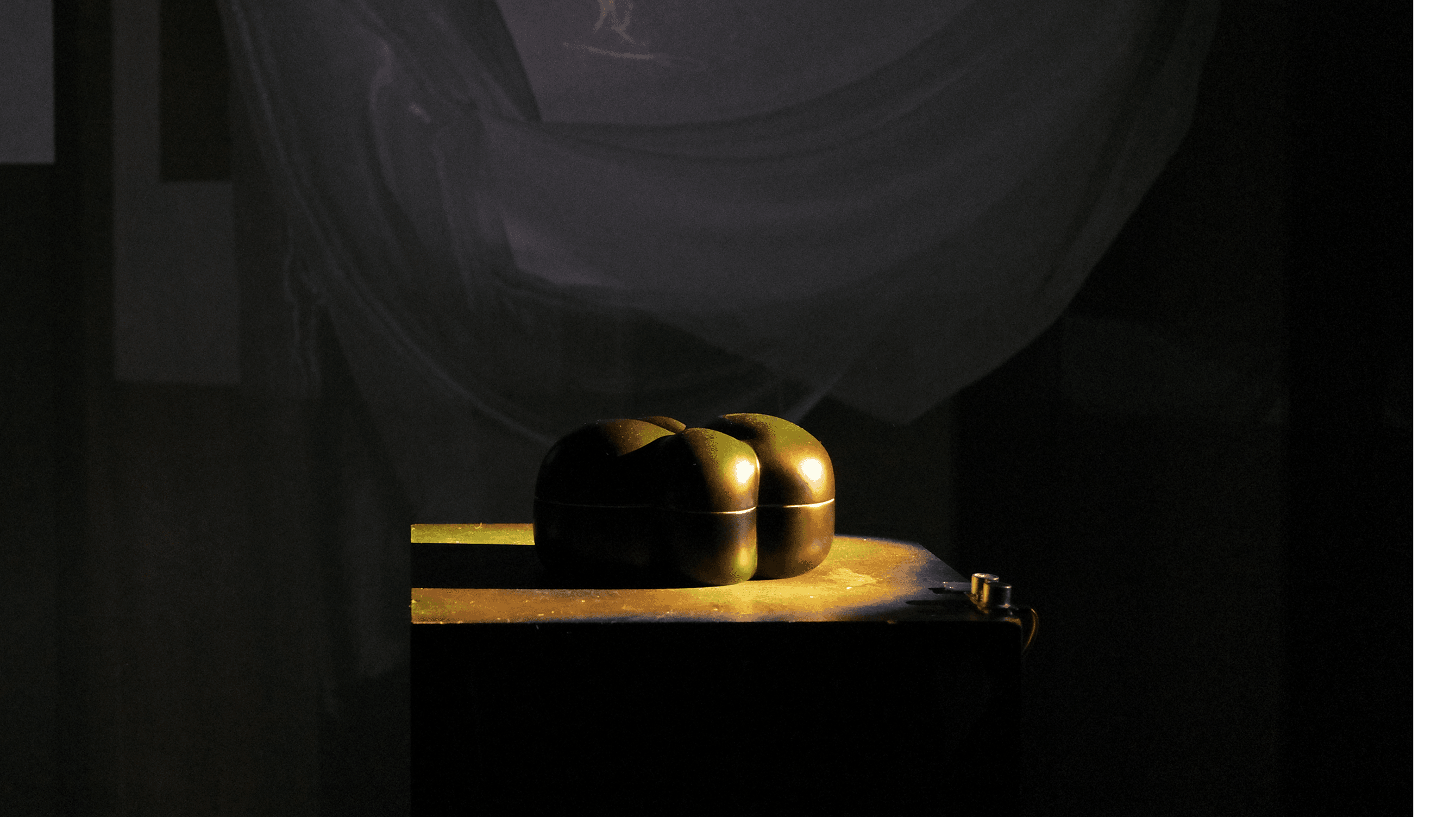
Ambient State (The Beacon): The object glows with a static, warm yellow light—like captured LA sunlight. It waits in a low-power mode.
Initiation (The Touch): The viewer must voluntarily engage the capacitive touch sensor to wake the system. This active choice shifts the lighting from static yellow to dynamic white.
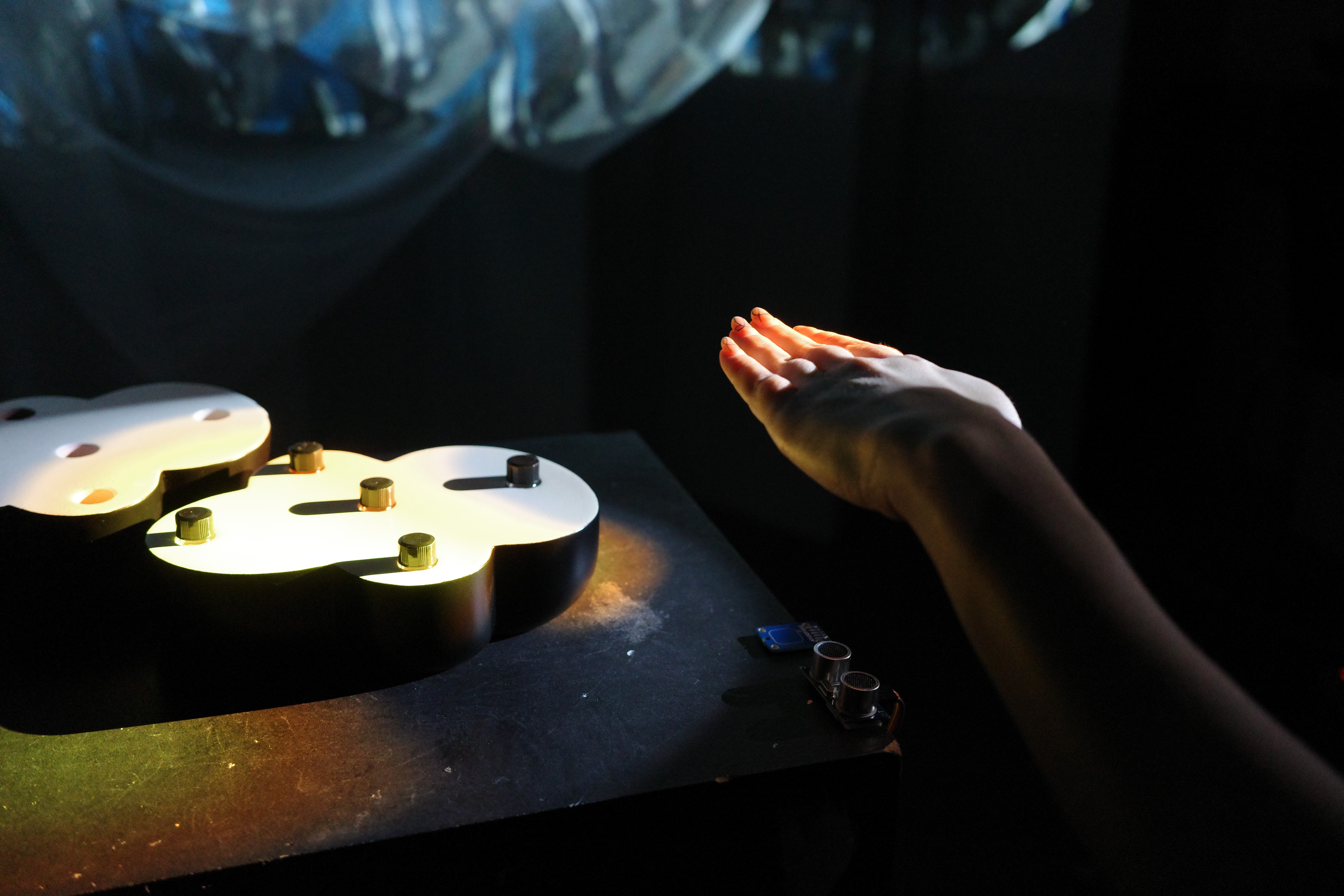
Engagement (The Approach): As the viewer leans in, ultrasonic sensors track their distance. The scent module releases the fragrance (Birch Tar/Neroli).
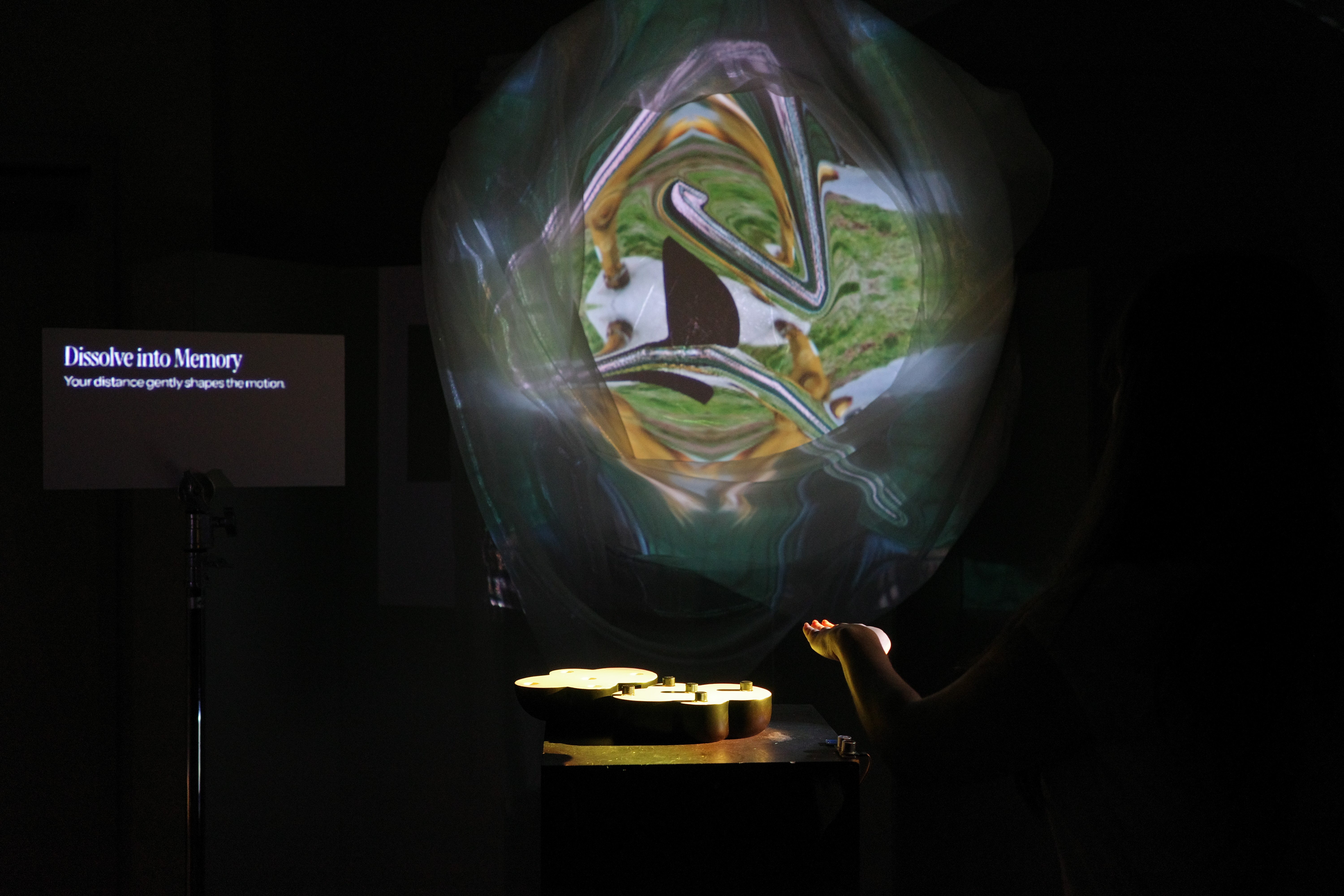
Response (The Mirror): The visuals shift from ambient to reactive, mirroring the user's physical proximity in real-time. The closer they lean, the more turbulent and dense the visual particles become.
From Stasis to Scent. The experience dissolves the barrier between user and system through a four-stage loop.
Ambient State (The Beacon): The object glows with a static, warm yellow light—like captured LA sunlight. It waits in a low-power mode.
Initiation (The Touch): The viewer must voluntarily engage the capacitive touch sensor to wake the system. This active choice shifts the lighting from static yellow to dynamic white.
Engagement (The Approach): As the viewer leans in, ultrasonic sensors track their distance. The scent module releases the fragrance (Birch Tar/Neroli).
Response (The Mirror): The visuals shift from ambient to reactive, mirroring the user's physical proximity in real-time. The closer they lean, the more turbulent and dense the visual particles become.
Opener
Opener
(The object glows like LA sunlight)
(The object glows like LA sunlight)
(The object glows like LA sunlight)
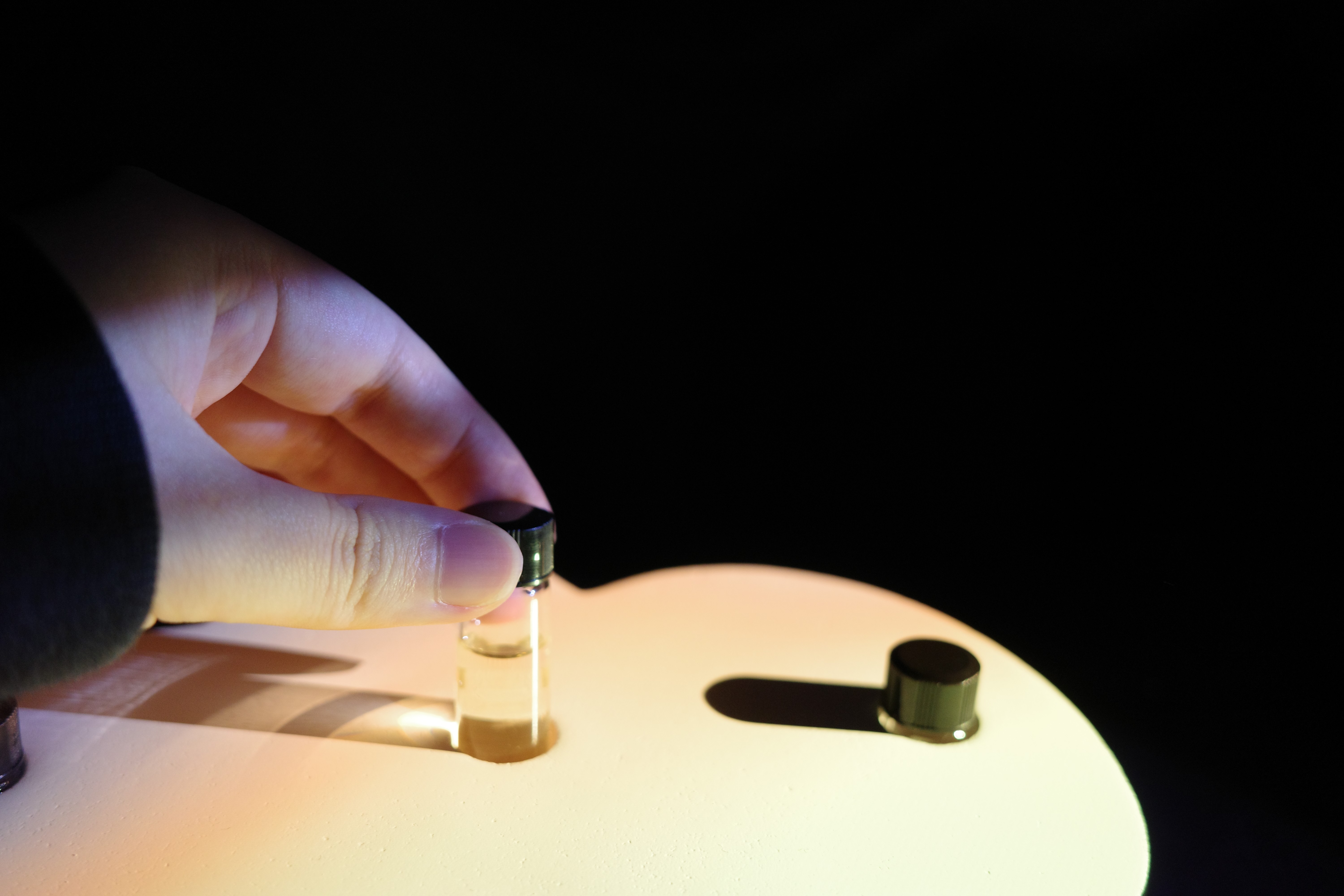
Sniff
Sniff
(Choose a scent to explore.)
(Choose a scent to explore.)
(Choose a scent to explore.)
Approach
Approach
(A sensor detects movement, activating the portal.)
(A sensor detects movement, activating the portal.)
(A sensor detects movement, activating the portal.)
Transform
Transform
(Projections shift with sound.)
(Projections shift with sound.)
(Projections shift with sound.)
/
Why It Matters
(04)
Materializing the Digital
Materializing the Digital
In a world dominated by flat screens, this project was an investigation into spatial interfaces. It taught me that digital content becomes infinitely more powerful when it interacts with physical geometry.
Beyond the Pixel: By projecting light onto a folded, dimensional surface, I learned that content must adapt to its canvas. A flat animation feels "played," but a projection-mapped structure feels "alive."
Agency & Intent: The decision to use a capacitive touch sensor (instead of a loop) was critical. It transformed the piece from a passive movie into an active exchange. The user must physically commit—touching the object—to initiate the change from the ambient "yellow state" to the dynamic journey.
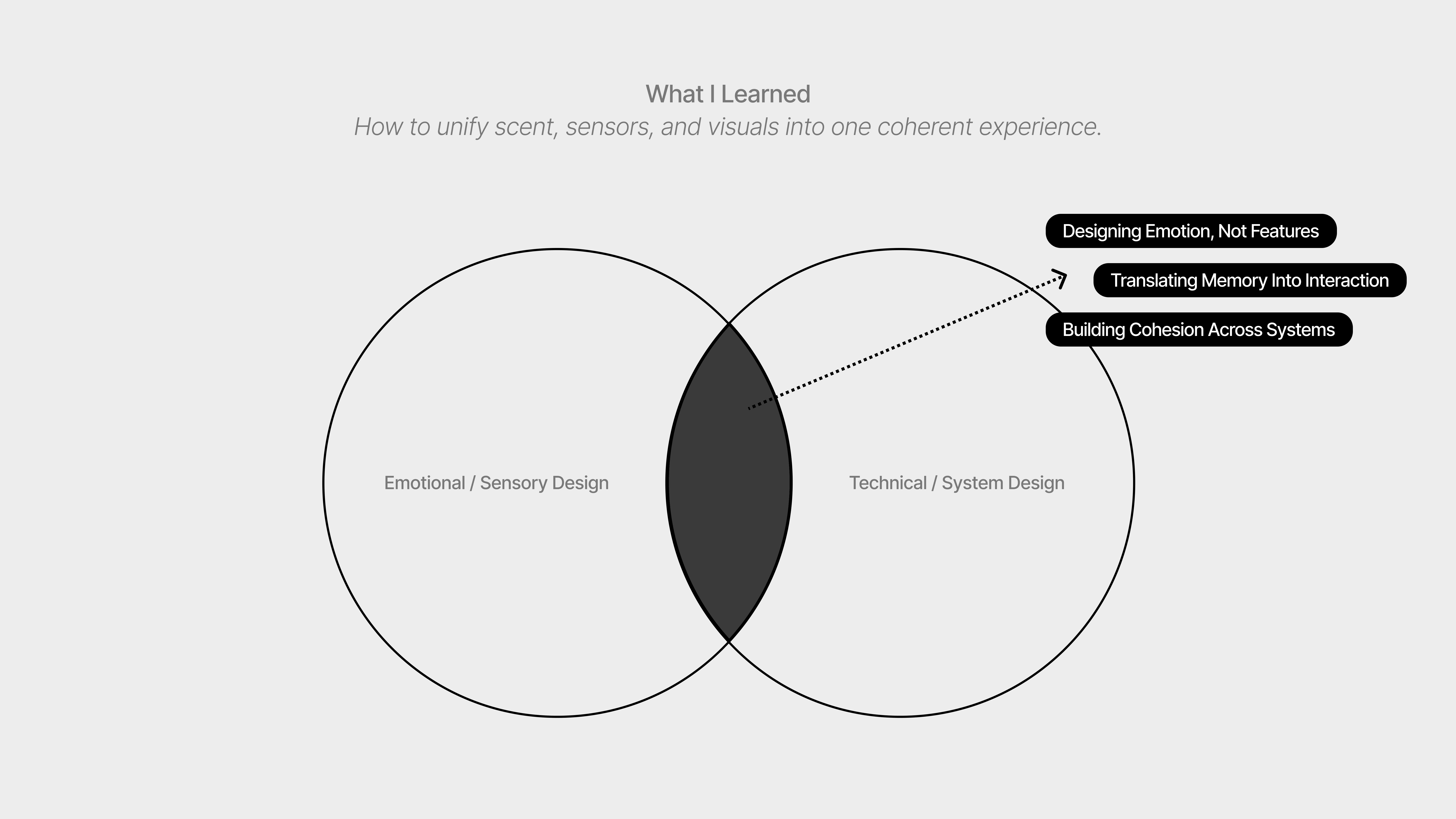
Clay to Code: This project solidified my design philosophy: interaction isn't just about code; it's about the friction between the digital logic and the material world.
In a world dominated by flat screens, this project was an investigation into spatial interfaces. It taught me that digital content becomes infinitely more powerful when it interacts with physical geometry.
Beyond the Pixel: By projecting light onto a folded, dimensional surface, I learned that content must adapt to its canvas. A flat animation feels "played," but a projection-mapped structure feels "alive."
Agency & Intent: The decision to use a capacitive touch sensor (instead of a loop) was critical. It transformed the piece from a passive movie into an active exchange. The user must physically commit—touching the object—to initiate the change from the ambient "yellow state" to the dynamic journey.
Clay to Code: This project solidified my design philosophy: interaction isn't just about code; it's about the friction between the digital logic and the material world.
Latest Projects.
Latest Projects
(05)
A curated selection of projects that tell stories through the balance of digital and physical design.